
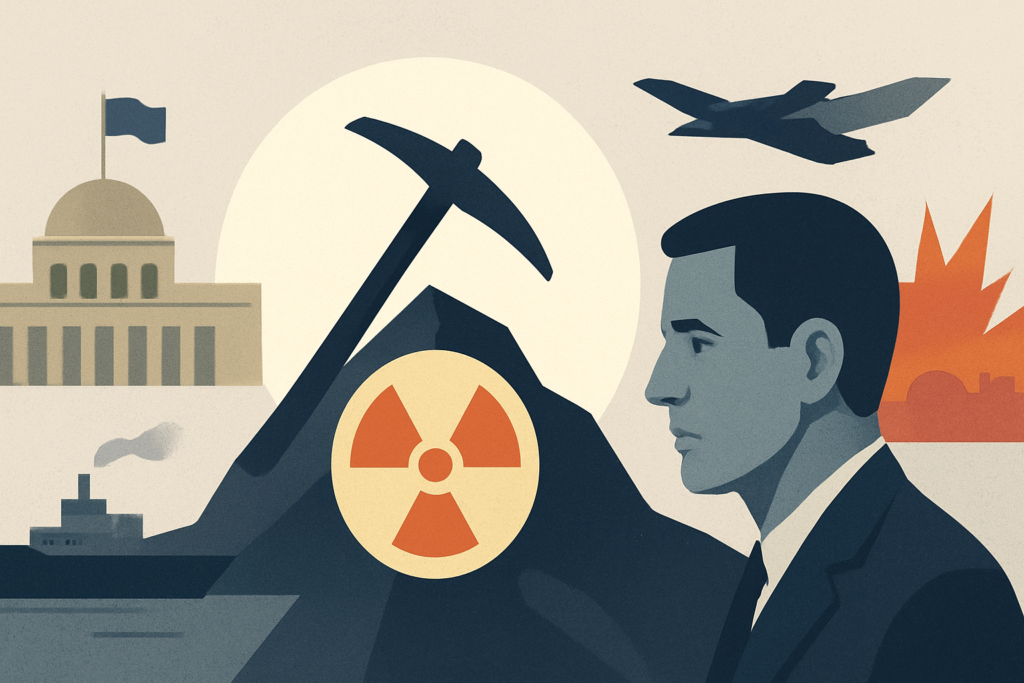
Iran has publicly rejected US accusations that a fortified site known as Pickaxe Mountain hosts nuclear activity, while the United States continued a new wave of strikes that analysts say has widened regional instability. Tehran’s denial and American threats have come as missile exchanges, Houthi warnings to shipping, and surging oil prices underscore how the conflict is reverberating across the Middle East and global markets.
Tehran denies nuclear work at Kolang Kouh
Esmail Baghaei, a spokesperson for Iran’s foreign ministry, posted on X that there is no nuclear activity at Kolang Kouh, also referred to in international reporting as Pickaxe Mountain. Baghaei framed the US focus on the site as unjustified, saying Iran has fulfilled its reporting obligations to the International Atomic Energy Agency and accusing Washington of using the claims as a pretext for aggression and sabotage.
The denial follows public comments by former US president Donald Trump, who warned of intensified strikes and said the United States would target the area near Pickaxe Mountain. The site has attracted attention because of reporting that describes it as a deeply buried, fortified complex near a major enrichment facility, but Tehran’s foreign ministry insists no nuclear work is taking place there.
Escalating strikes and regional military actions
The US military conducted what was described in live coverage as its 11th consecutive night of strikes on Iran, primarily targeting aircraft hangars and drone storage. Those operations have coincided with multiple related incidents: the Jordanian army reported intercepting four Iranian missiles, with two additional missiles falling in remote, uninhabited areas without causing reported casualties or damage.
The intensified operations and threats have prompted concern about opening new fronts. Yemen’s Iran-aligned Houthi movement announced warnings to shipping in the Red Sea and said it would block tankers using Saudi Arabian ports, a move that could disrupt alternate export routes for Saudi oil if enforced.
Economic fallout: oil prices and shipping disruptions
Markets reacted quickly to the escalation. Brent crude rose to about $95.16 a barrel, up 4.6% and marking a six-week high; the benchmark has climbed roughly 20% over the past month amid the conflict. Shipping through key waterways has also been affected. Data cited in reporting showed a drop in vessel transits through the Strait of Hormuz, with three ships passing on one recent day compared with four the previous day, and no very large crude carriers or LNG tankers visible in that window.
The Houthis claimed several Red Sea-bound vessels turned away after receiving warnings. Independently verifying those reroutings is difficult, but at least three oil tankers reportedly reversed course away from Houthi-controlled coasts, highlighting the vulnerability of alternative routes like the Suez Canal when the Gulf is contested.
Political and military consequences for regional actors
US officials and regional leaders have weighed in on the broader implications. US defence secretary Pete Hegseth told the Senate the military operations related to the conflict have cost $37.5 billion so far and requested an additional $67.1 billion to replenish equipment and munitions and sustain operations. Separately, US political figures have warned of potential long-term strategic consequences if Iran were to exert control over the Strait of Hormuz.
Lebanese prime minister Nawaf Salam reiterated efforts to secure a full Israeli withdrawal from southern Lebanon amid related security initiatives. And in the United States, political debate has surfaced over accountability for wartime actions and visits by foreign leaders, reflecting intense domestic scrutiny of the conflict.
Human cost and legal claims
The conflict has included troubling domestic developments inside Iran. The judiciary’s Mizan Online reported that a man identified as Mehdi Khanaki was executed after being found guilty of charges connected to protests last winter; the report said he was arrested in possession of a large arsenal and convicted of acting in favour of foreign regimes. International human rights groups have previously noted Iran’s high execution rate, but independent confirmation of every judicial claim is often limited.
Meanwhile, the US military reported continued non-combat fatalities: the remains of four service members killed in related regional incidents were being returned to the United States, and reporting indicated 18 US service members have died since the conflict’s outbreak.
What happens next
The situation remains fluid. Tehran’s categorical denial about activity at Pickaxe Mountain complicates any immediate case for a focused military strike there, even as US officials signal escalation is possible. At the same time, missile exchanges, Houthi naval warnings, and disruptions to shipping and energy markets all increase the cost of prolonged confrontation for regional and global stakeholders alike.
Diplomatic and intelligence channels will likely be central to verifying claims about sites such as Kolang Kouh and to lowering the risk of further escalation. For now, markets, shipping companies, and regional militaries are adapting to a heightened threat environment that could shift rapidly depending on political and operational decisions taken in Washington, Tehran, and allied capitals.
Source: The Guardian