
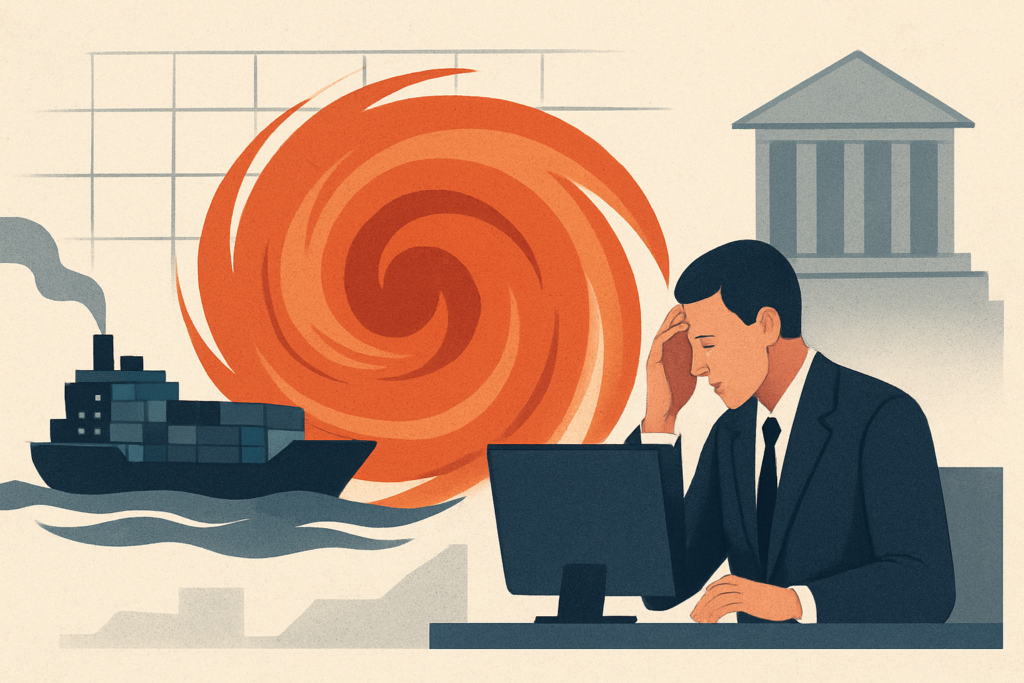
Climate forecasters and economists are increasingly concerned a very strong El Niño this year could act as a multi-channel supply shock, worsening food and energy prices and straining global logistics just as the world is already vulnerable. Analysts say the timing and projected strength of the event could multiply the economic impacts of existing disruptions, including those stemming from geopolitical tensions in the Middle East.
Why this El Niño matters
El Niño occurs when sea surface temperatures in the eastern Pacific rise, altering jet streams and regional weather patterns. The phenomenon typically brings higher global temperatures and a greater likelihood of extreme weather—droughts in some regions, floods in others—which can simultaneously affect agricultural output, energy production and transport networks.
Forecasters are flagging that the current cycle has a high probability of becoming one of the strongest in decades. The U.S. Climate Prediction Center warned that the event could reach “strong” levels in July to September and “very strong” thresholds in October to December, language that underscores the potential for widespread, concurrent disruptions across multiple sectors.
Channels of economic disruption
Deutsche Bank macro strategist Henry Allen noted the broad reach of El Niño’s impacts, saying these events “can act as a multi-dimensional supply shock” with links to higher food and energy prices and wider supply-chain interruptions. That multi-channel nature makes El Niño different from a single commodity-driven shock: it can hit crops, hydropower generation, shipping routes and even public health and political stability simultaneously.
On the agricultural side, altered rainfall and temperature patterns can reduce yields, kill livestock and damage infrastructure supporting food distribution. Hydropower is vulnerable where drought lowers reservoir levels and cuts electricity output at a time when hot weather typically boosts demand for air conditioning. Shipping is another weak point: the last recent El Niño episode—cited in reporting on the current outlook—saw a roughly 30 per cent fall in rainfall that forced restrictions at the Panama Canal, illustrating how weather shifts can ripple through global logistics chains.
Compounding existing pressures
Economists warn the El Niño threat arrives at a precarious moment. Supply channels are already under stress from geopolitical developments, including conflict-related disruptions that have affected shipping through key chokepoints. That combination elevates the risk that the new weather-driven shock could feed into already elevated commodity prices and broader inflation.
Allen compared current conditions to past eras when repeated, unrelated supply shocks contributed to entrenched inflation expectations. He cautioned that—even if weather shocks are temporary—their frequency and overlap with other disruptions can complicate the task for policymakers trying to stabilize prices.
What this means for inflation and policy
Persistently higher food and energy costs would directly feed into consumer price inflation, tightening the margin for central banks to remain accommodative. Yet policymakers are also facing mixed signals in inflation data. In Canada, for example, the consumer price index rose 2.8 per cent in June—down from 3.2 per cent the previous month and slightly below expectations—while the Bank of Canada’s preferred core inflation measure slipped to 1.85 per cent, the lowest since September 2020 and the first time it has been under 2 per cent in nearly six years.
Economists such as Leslie Preston of TD Economics have interpreted recent data as supportive of a cautious stance from central banks, suggesting limited near-term pressure to raise interest rates. But a strong El Niño could change that calculus by pushing up energy and food prices and prompting more immediate monetary responses.
What to watch in the coming months
Forecasters say attention should focus on climate model updates over the next several months, particularly conditions in the eastern Pacific and how those translate into regional precipitation and temperature shifts. October to December is the period flagged as most likely to reach “very strong” El Niño thresholds, meaning the late-year outlook will be especially important for markets, farmers and utilities planning for potential disruptions.
Analysts also urge monitoring of transport chokepoints and energy infrastructure that are vulnerable to hydrometeorological extremes. The combination of higher temperatures, lower rainfall in key basins and existing geopolitical strain could make certain supply routes and power systems more fragile than seasonal patterns would suggest.
The assessment of this risk and its potential economic consequences was laid out in reporting for the Financial Post newsletter Posthaste, written by Pamela Heaven with additional reporting from Financial Post staff and Bloomberg. Policymakers, commodity markets and supply-chain managers will be watching climate updates closely as forecasts evolve.
Source: Financial Post