
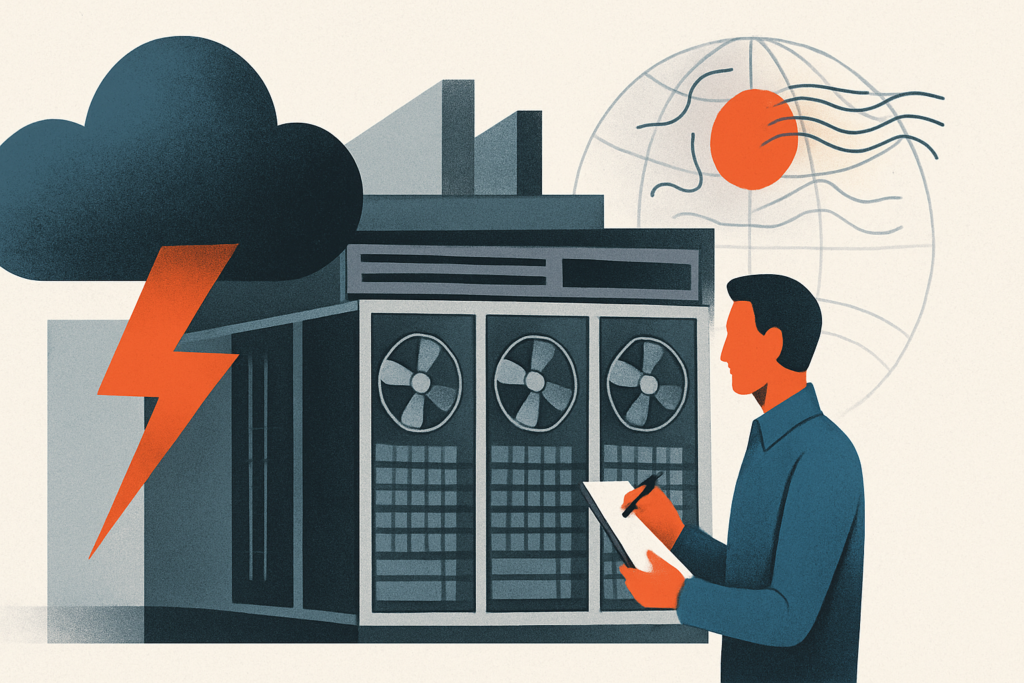
Long-range meteorological models are converging on a potentially record-strength Super El Niño for winter 2026/27. While weather forecasts are not infrastructure plans, the scale and persistence of this event — models indicate sea-surface anomalies likely exceeding the +2°C Super threshold and some runs peaking near +3°C or more — create a credible scenario for widespread, simultaneous weather stress across major cloud regions. That raises several practical risks for data-centre operators and cloud-platform teams, from cooling-load swings and fuel supply pressures to transport and hardware procurement disruptions.
What the forecasts are signalling
Operationally relevant features highlighted by recent multi-model forecasts include: a strong tropical Pacific warm anomaly that is already driving atmospheric changes, an amplified Pacific jet stream, and a North American winter pattern that models link to a high-pressure block over Canada and an active southern storm track across the United States. In plain terms, forecasters expect an increased chance of heavy precipitation and storminess across southern and coastal U.S. corridors, warmer-than-normal conditions over much of Canada and the far northern U.S., and an elevated potential for high-amplitude pressure patterns that can produce abrupt regional swings in temperature and precipitation.
Primary risks to cloud operations and on-prem datacentres
These meteorological signals map to a limited set of infrastructure failure modes that operators should treat as elevated-risk during winter 2026/27:
- Cooling demand and capacity strain: Regional anomalies can increase peak cooling loads where warmer conditions persist, while episodic storms and humidity shifts complicate evaporative or free-cooling strategies.
- Grid and generator stress: Widespread storms and synchronized demand peaks can strain transmission and distribution networks. Longer, concurrent outages increase reliance on on-site backup generation and fuel logistics.
- Flooding and access disruptions: Heavy precipitation and storm surge risks threaten site access, on-site fuel delivery, and adjacent network infrastructure such as fibre and substations.
- Supply-chain interruptions: Port congestion, road closures and regional transport disruption during peak build/test windows can delay critical hardware delivery and spare-part replenishment.
- DR and failover pressure: Simultaneous regional impacts can limit the effectiveness of typical cross-region failover if geographically correlated.
Concrete measures for planners and CTOs
Translate the meteorological forecast into a prioritized checklist tailored to your footprint. Recommended actions include:
- Reassess cooling margins: Model seasonal capacity with conservative assumptions for higher sensible and latent loads. Validate evaporative and economizer strategies against higher humidity scenarios and ensure automatic constraints to avoid thermal excursions.
- Test and top up backup power: Schedule generator load tests and UPS maintenance. Confirm fuel contracts, delivery windows and minimum inventory thresholds to cover multi-day outages, noting that simultaneous regional demand can constrain suppliers.
- Hardening and flood mitigation: Re-evaluate site flood risk and drainage, secure critical outdoor equipment, and confirm staff access plans for storm conditions. Consider temporary flood protection for at-risk entrances and yards.
- Cross-region resiliency planning: Map geographic correlation of supplier and cloud-region risks. Where possible, distribute critical workloads to regions with lower El Niño exposure or diversify across providers and geographies to reduce correlated failure risk.
- Inventory and procurement timing: Accelerate orders for long-lead spares, HVAC components and networking gear to avoid winter delivery bottlenecks. If buildouts are planned for late 2026, consider moving procurement earlier in the supply chain to reduce exposure to shipping disruptions.
- Workload scheduling and throttling: Identify non-critical workloads that can be deferred during peak-stress windows. Implement automated throttles for batch jobs and policies to shift workloads proactively if capacity margins erode.
- Communications and incident playbooks: Update incident response runbooks to include regionally concurrent events, clear escalation paths for supplier failures, and pre-authorised budget lines for emergency procurement and fuel purchases.
Supply-chain and procurement guidance
Forecasts indicating a stronger-than-normal El Niño suggest elevated risk of winter transport and port disruption. Practical steps: pre-order critical spares and HVAC modules now where cashflow permits; threshold-based procurement triggers for replacement hardware; and agreements with alternate carriers or local suppliers for last-mile delivery. Maintain a prioritized spare-parts list mapped to the components most likely to extend outages (generators, UPS, chillers, critical network switches).
Operational checklist
- Run thermal-resilience scenarios with +10–20% peak cooling demand assumptions where applicable.
- Confirm fuel contracts and 72–120 hour on-site fuel availability for critical sites.
- Accelerate procurement of long-lead items and increase critical-spare stocking levels.
- Validate cross-region failover plans for geographic correlation and perform tabletop DR exercises.
- Update vendor SLAs and obtain contingency commitments for emergency logistics.
Forecast uncertainty remains — models differ in magnitude and timing — but multi-model consensus that a major El Niño is unfolding gives infrastructure teams time to act. Treat the forecast as a risk signal: prioritize low-cost, high-impact mitigations now and escalate contingent procurement and resiliency investments where business continuity exposure is greatest.
Source: Severe Weather Europe