
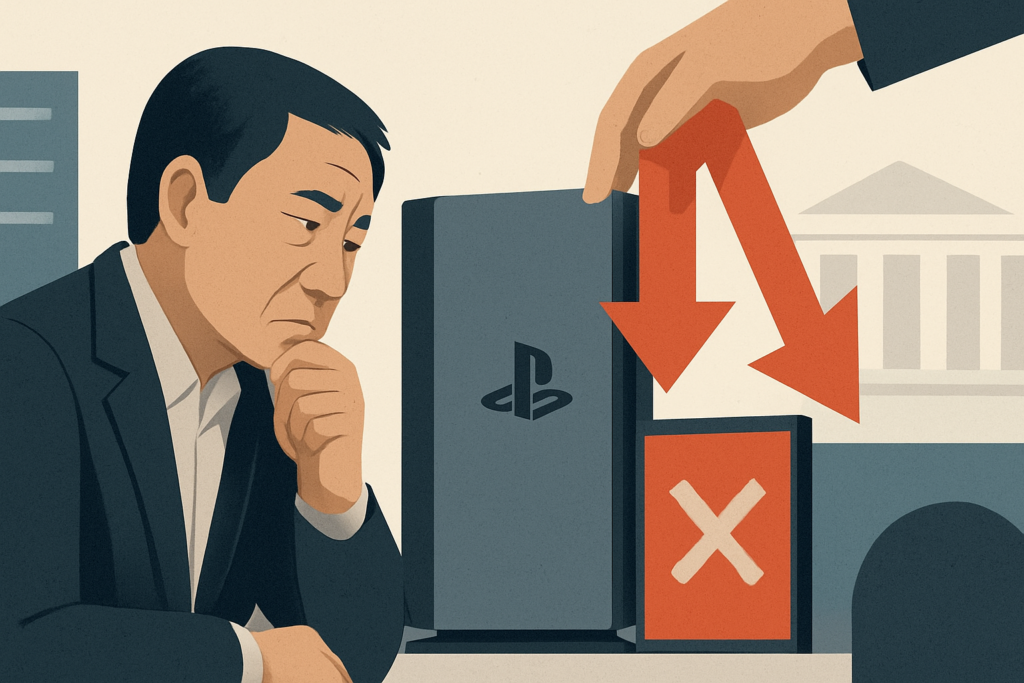
Disgaea creator Sohei Niikawa told Noisy Pixel at Anime Expo 2026 that Sony’s reported plan to end physical PlayStation game production starting in 2028 risks severing a direct line between developers and fans. Niikawa argued boxed games act as personal keepsakes, and bluntly suggested that if Sony eliminates physical packages it should “get rid of the hardware” as well.
Niikawa’s comments at Anime Expo: hardware tied to physical media
During an interview at Anime Expo 2026 about his upcoming strategy RPG Demons’ Night Fever, Niikawa addressed reports that Sony intends to stop producing physical PlayStation games from 2028. He said he understands the business logic behind moving away from discs and cartridges, but emphasised the meaningful role physical editions play for fans and creators.
Niikawa described boxed games as objects that “become a memory or a keepsake” and said they let players form a lasting connection to a title and its makers. He pointed to convention interactions where fans bring boxed copies to events to request autographs, then display those signed editions at home. Those moments, he said, are part of what makes physical releases valuable.
How Niikawa framed the trade-off between business and fan experience
Niikawa acknowledged the commercial reasons Sony’s executives might favour a digital-only model, saying, “From a purely business perspective, I can understand why the people at Sony would make that decision.” Yet he expressed doubt that the leaders who make those calls appreciate the fan-facing side of game development.
He suggested executives may not have experienced firsthand the scene at fan events — the encounters in which a physical copy becomes a tangible keepsake or a marker of community. That perceived gap in experience underpins his critique: decisions driven by business metrics can miss non-commercial values that matter to players and developers.
Why it matters
Niikawa’s remarks foreground who stands to lose if a major platform moves entirely to digital distribution: fans who prize physical editions and developers who use physical copies as a way to connect with their audience. According to his account, physical packages enable activities that digital storefronts do not replicate at the same level — autographing, display, and the feeling of owning a piece of a creator’s work.
His suggestion that Sony should “eliminate the hardware” if it will eliminate physical games reframes the debate. Rather than treating consoles as neutral delivery devices, Niikawa casts them as part of a product ecosystem where physical media plays a social and symbolic role. That argument puts pressure on platform owners to weigh non-financial forms of value alongside cost and distribution efficiency.
Context and implications for Sony and developers
The comments came in the context of promoting Demons’ Night Fever, developed by SuperNiche and published with Arc System Works involvement, demonstrating that this stance is grounded in a creator’s perspective. Niikawa’s dual position — accepting the economic case yet defending physical editions — highlights an internal tension developers face when platform business strategies shift.
For developers who still plan physical releases, the change Niikawa describes would alter how they approach community engagement at events. If boxed copies are less available, the physical artefacts that anchor autograph sessions and in-person fan rituals would diminish, reducing opportunities for the sorts of direct, tangible interactions Niikawa described.
What to watch next
Key open questions remain. The report that Sony will end physical PlayStation game production beginning in 2028 is the premise of Niikawa’s critique; confirmation of Sony’s policy timeline and the scope of any phase-out will determine how developers and retailers must adapt. Niikawa’s comments do not indicate how widespread industry sentiment is among creators, nor whether publishers will resist or accommodate a digital-only shift.
Also unresolved is how developers will replace the non-commercial value Niikawa associates with physical editions. He highlighted autographing and display as examples, but offered no alternatives. Observers should watch whether creators pursue limited-run collector items outside first-party physical releases, or whether fan events evolve new rituals to preserve those connections.
Niikawa’s remarks make a simple but pointed claim: if Sony removes the physical element that underpins certain developer–fan interactions, the company should rethink the role of the console itself. The comment reframes a distribution policy as a cultural choice about what parts of the game experience a platform keeps — and what it discards.
Source: Noisy Pixel