
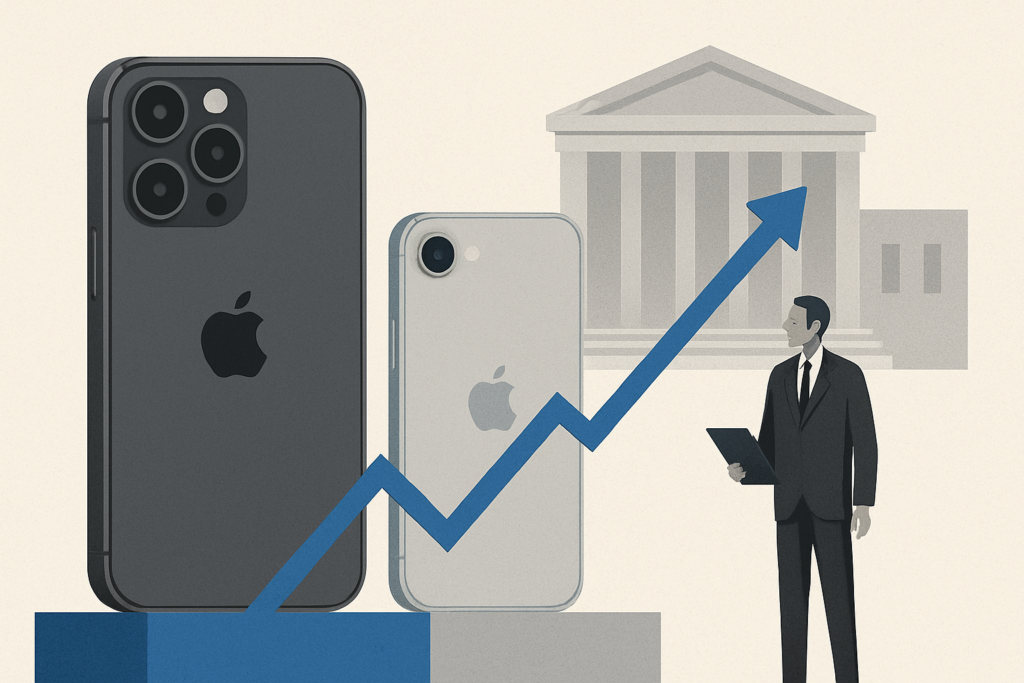
Apple will introduce iPhone 18 Pro models in September 2026 but postpone the entry-level iPhone 18 until spring 2027, a move Forbes says is designed to boost holiday revenue and restrict full Apple Intelligence features to higher-end hardware. The split launch affects shoppers, developers and the secondary market by placing advanced Siri and local AI capabilities behind more expensive Pro devices.
Confirmed: September Pro launch, base model delayed to spring
Forbes reporter Ewan Spence reports the iPhone 18 Pro and iPhone 18 Pro Max are scheduled to be announced on Sept. 12, 2026, while the standard iPhone 18 (and the iPhone 18 Air mentioned in the piece) will not arrive until spring 2027. The article frames the staggered schedule as an explicit commercial decision rather than a supply-chain failure, aimed at improving Apple’s average selling price during the holiday quarter.
According to the same report, Apple plans to ship iOS 27 with the Pro hardware and will market Apple Intelligence and new Siri AI features alongside the Pro models. Forbes cites iOS 27 beta behaviour to explain why the advanced features are initially limited to Pro devices.
How the split release and hardware requirements work
Forbes says iOS 27’s advanced Apple Intelligence features and the latest Siri AI rely on device memory and local model execution. Beta versions of iOS 27 reportedly indicate 12 GB of RAM is the minimum hardware needed to run the full suite of tools, including the ability to run certain large language models locally. Because the Pro models are the devices slated for September, they become the initial hardware gateway to the new AI features.
The article describes a staggered product and software rollout: iPhone 18 Pro models arrive in September with iOS 27 and the full set of Apple Intelligence tools, while the entry-level iPhone 18—potentially lacking the 12 GB threshold—arrives months later. Forbes frames this as an operational choice that intentionally narrows autumn buying options.
Why it matters
Restricting advanced local AI to Pro hardware changes who gets immediate access to Apple’s headline AI features. Consumers whose upgrade cycles fall this autumn face a binary decision, Forbes argues: buy a Pro model at an estimated premium (the piece suggests around $200) or defer the purchase until spring when the base iPhone 18 may ship. That pricing dynamic could lift Apple’s average selling price in a high-volume quarter.
The report also warns of downstream effects on resale markets and device lifecycles. If key AI features require 12 GB of RAM, older phones that lack that memory will not gain the same functionality from iOS 27, which could accelerate depreciation of recent non‑Pro models and influence upgrade timing.
Context and implications for developers and the market
Forbes positions this as a deliberate strategy to push more buyers toward higher‑margin hardware while positioning Pro models as the default platform for on‑device AI. For developers, the limitation implies an initial target audience that skews toward Pro‑class devices running iOS 27 with ample RAM. That narrows early-adopter testing and could shape which AI-driven features developers prioritise for launch windows tied to iOS 27.
From a retail and supply perspective, the staggered rollout removes a current-generation mid-tier option from holiday shoppers, according to the piece. That absence could preserve older models’ pricing for a time, but Forbes suggests the effect may be temporary: when the base iPhone 18 arrives with its own AI positioning, resale values for pre‑AI models could fall more rapidly.
What to watch next
Key open questions Forbes highlights include whether the base iPhone 18 will ship with 12 GB of RAM in spring 2027 and how Apple will explain feature differences between devices. The timing of iOS 27’s public release relative to the Pro launch is another detail affecting adoption and developer planning. Forbes recommends watching Apple’s marketing and carrier offers for signs of how aggressively the company will position Pro features as mandatory for the new Apple Intelligence experience.
For consumers and developers, the immediate uncertainties are concrete: will their device choices this autumn lock them out of certain Siri and local AI features until spring, and how large will the price premium feel in real purchasing decisions? Forbes treats the reported $200 gap as an illustrative figure rather than a company confirmation.
Apple’s strategy — as presented by Forbes — links hardware memory to software capability and uses product timing to shape purchasing behaviour. The result is a compressed window where only higher-end hardware offers the full Apple Intelligence experience.
Source: Forbes