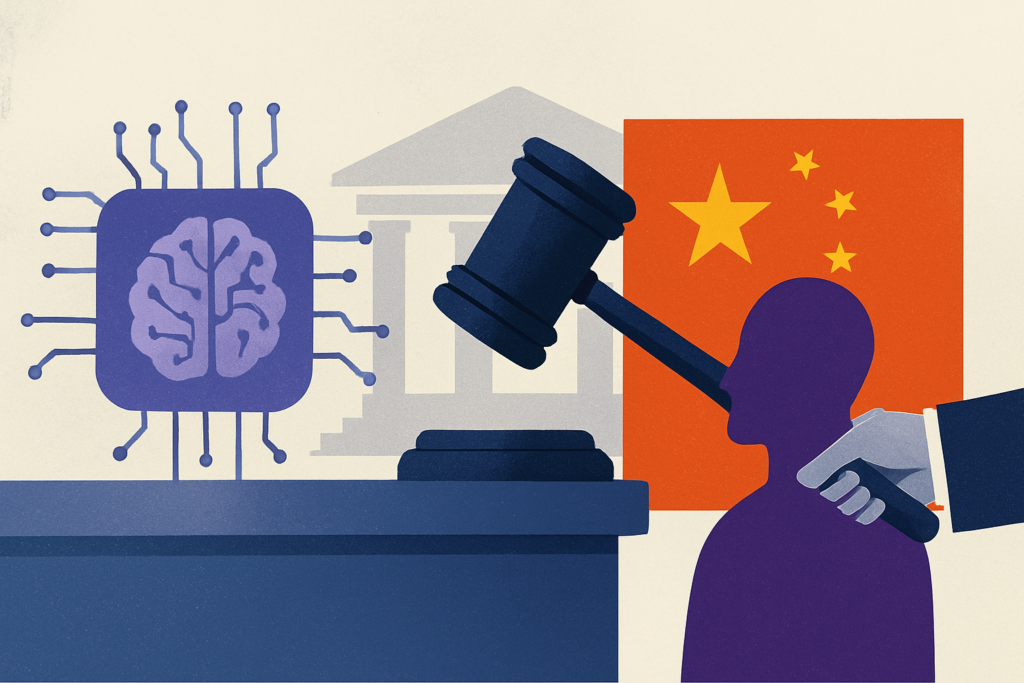
Senior U.S. officials are considering a suite of actions targeting Chinese artificial intelligence models that stop short of an explicit ban but could effectively restrict their use in American markets. Agencies including the Department of Commerce, the National Security Agency and the White House have discussed options since 2025 that range from sanctions listings to executive orders and public security advisories.
Options on the table
According to reporting, the administration’s discussions have encompassed several tools: placing Chinese AI labs on sanctions lists, issuing security warnings about foreign models, and using executive authority to attach security requirements and liability to U.S. companies that host or deploy those models. Commerce Department staff drafted rules as early as summer 2025 intended to protect domestic supply chains from the potential risks of Chinese open‑source models, although some advisers initially resisted a hard regulatory approach.
A gradual, durable approach rather than an outright ban
Officials and advisers appear to be leaning toward measures that generate sustained deterrence without invoking an immediate prohibition. One source described the trajectory as “slower and more durable,” pointing to tactics such as procurement restrictions, the threat of sanctions, and pressure campaigns aimed at American firms that rely on Chinese models. These steps could raise the regulatory and commercial costs of using those models and make them less attractive to corporate buyers.
Regulatory risk as a deterrent
Some strategists have framed the likely approach as an application of ‘‘FUD’’—fear, uncertainty, and doubt—through soft guidelines and public warnings rather than binding prohibitions. That tack would seek to create enough ambiguity and potential liability that regulated entities choose to avoid certain models. Proponents of this strategy argue it can achieve policy goals while avoiding unintended market disruptions, though critics warn it can also produce uneven impacts and incentives.
Political and economic drivers
Commercial considerations appear to be part of the calculus. U.S. companies have increasingly turned to Chinese open‑source models because they are often cheaper and can be close in capability to commercial offerings. Limiting access to those models would protect the market positions of major U.S. providers such as Google, OpenAI, and Anthropic, observers say. The AI sector has also been a significant contributor to recent stock market performance, so policymakers may be sensitive to disruptions that could affect U.S. technology firms and broader market confidence.
Security trade‑offs and contested benefits
Open models raise legitimate cybersecurity concerns, including the risk of backdoors, data leakage, or other vulnerabilities that could be exploited by foreign actors. Officials exploring restrictions cite these risks as a rationale for tighter controls. At the same time, some experts and industry actors point out that open models can support cyber defense efforts and that restricting access would not eliminate the broader threat landscape. For example, proponents of open development argue these models can be useful in defensive tasks and that some open tools may even outperform commercial systems for specific security purposes.
Risks of overreach
Policymakers must weigh the risk that overly aggressive measures could push startups and smaller buyers toward less transparent or less vetted providers. There is also concern that heavy-handed restrictions could deter large cloud providers—sometimes called hyperscalers—from hosting foreign models, which would shrink legitimate, monitored channels for model deployment and could drive activity into less visible corners of the internet. Supporters of a cautious approach aim to strike a balance that protects national security without unduly hampering beneficial innovation or driving adoption into riskier venues.
Recent developments that shifted momentum
Sources say momentum for tighter restrictions increased after the release of a Chinese model known as Kimi K3 and changes within the White House that raised the influence of advisers favoring more stringent measures. Those developments helped revive the Commerce Department’s earlier rule drafts and contributed to a reassessment of how best to shield domestic supply chains from perceived foreign influence in AI tooling.
Implications for industry and policy
The current deliberations suggest a future in which U.S. policy relies more on regulatory risk, procurement decisions, and reputational pressure than on an explicit legal ban. That posture could reshape procurement strategies across government and private industry, change the calculus for companies building on or integrating open‑source models, and prompt international responses. Observers will be watching for any formal rules, advisories, or executive actions that codify these approaches and for guidance on how U.S. firms should manage model selection and hosting arrangements.
As officials continue to weigh their options, the debate highlights the tensions between national security, market competition, and the practical benefits and risks of open AI development. Whether the eventual policy mix produces durable protections without stifling legitimate uses will be a central question for regulators, companies, and researchers alike.
Source: The Decoder