
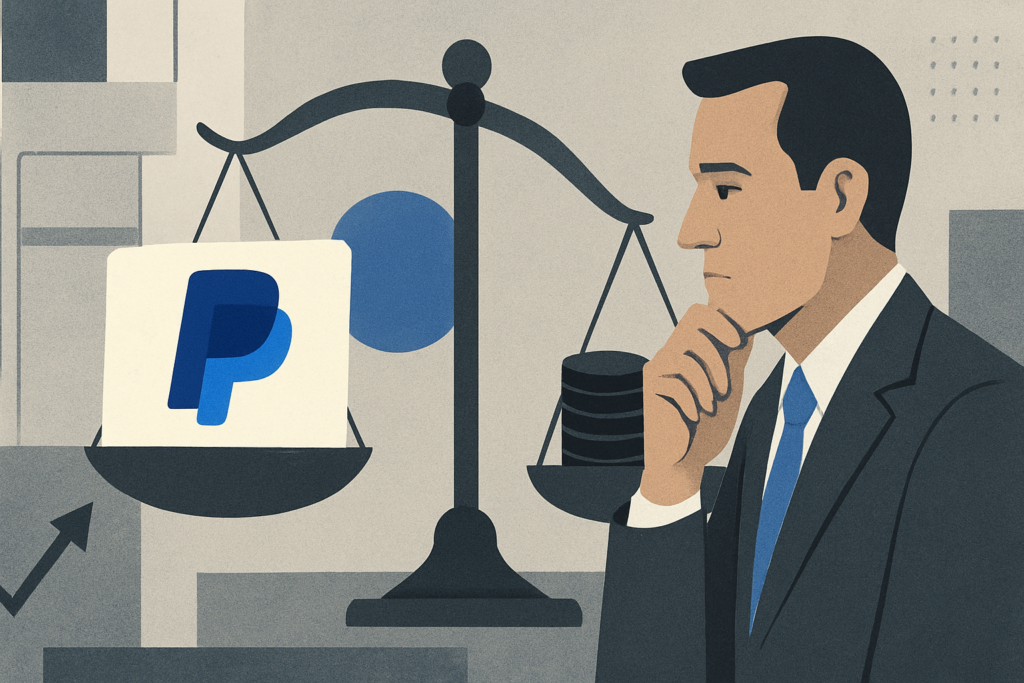
WSJ reported on July 23, 2026 that PayPal chief executive Enrique Lores is weighing strategic options for the company, including a potential sale for billions. The possible transaction matters beyond Wall Street: developers, merchants and payments partners could face changes to APIs, integrations, product plans and commercial terms if ownership shifts.
WSJ: PayPal CEO exploring sale of the company
The Wall Street Journal says Enrique Lores has added a sale to the list of strategic options he is considering for PayPal. The report frames the move as a new lever as Lores tries to stabilise and improve the company’s trajectory. WSJ’s coverage characterises a sale as a material shift in strategic direction and states the alternative could fetch a multibillion-dollar price—language present in the report’s headline.
How a sale could change PayPal’s products, APIs and integrations
The WSJ report highlights the areas likely to be affected if PayPal is sold. Ownership change typically leads to reassessment of product roadmaps, commercial terms and platform priorities—questions that matter to teams that build on PayPal’s stack.
Specifically, a sale could lead acquirers to alter API access, SDK support and developer tooling. That might include different versioning policies, modified service-level agreements, or new pricing models for API calls and hosted services. Merchants could see changes to integration plugins, contract terms, dispute-handling workflows and pricing tiers tied to transaction volume.
PayPal’s partnerships and white‑label relationships could also be renegotiated. The company’s merchant-facing features and backend payments infrastructure are tightly integrated into many e-commerce stacks; a new owner could prioritise some integrations over others, accelerate or pause planned features, or consolidate overlapping services with its own payments technology.
Why it matters
PayPal remains a major payments touchpoint for online merchants and third-party developers. WSJ’s report matters because changes in ownership tend to ripple through technical and commercial ecosystems that depend on predictable APIs, documentation, and contractual commitments.
For developers, uncertainty can raise migration and maintenance costs. If an acquirer changes API access or deprecates endpoints, engineering teams may need to rework integrations on tight timelines. For merchants, shifts in pricing or dispute policies can affect margins and customer experience. For customers of PayPal-powered services—marketplaces, subscription platforms and point-of-sale providers—any sudden change in processing rules or integration support could disrupt revenue flow.
Investors and vendors that provide complementary fintech infrastructure will watch for how an acquisition reshapes competitive dynamics: an acquiring company might fold PayPal’s services into a broader stack, limit merchant choice, or reposition PayPal as a channel for its own products.
Competitive and regulatory implications for payments infrastructure
The WSJ article frames a sale as consequential for the wider fintech product landscape. A change in PayPal’s ownership could shift market power among payments platforms and infrastructure providers, potentially changing how enterprises choose partners for checkout, fraud prevention and payouts.
Regulatory and contractual obligations are also relevant factors when a large payments firm changes hands. Existing merchant agreements, data-processing arrangements and compliance programs may complicate an ownership transfer and affect the timing and scope of any operational changes. The report implies those legal and operational constraints will shape what an acquirer can immediately change versus what must persist under existing contracts.
What to watch next
WSJ’s reporting leaves several open questions. Key items to monitor include whether PayPal’s board formally authorises a sale process, whether Lores or the company names advisers to run an auction or solicits strategic bids, and whether any suitors surface publicly.
Developers and merchants should watch for official communications from PayPal about roadmap continuity, API versioning timelines, and contractual protections for existing integrations. PayPal’s public filings, regulatory disclosures and vendor notices—if and when they appear—will be the primary source of confirmed details about timing, required transitions and any mandated consumer- or merchant-protection measures.
It is uncertain whether a sale will proceed or whether other strategic options will be chosen instead. The WSJ piece reports that sale is one option under consideration, not a completed decision.
If a transaction becomes public, the pace at which an acquirer moves to integrate PayPal’s stack will determine how rapidly developers and merchants must respond.
PayPal’s fate under new ownership will directly affect the technical contracts and roadmaps that hundreds of thousands of developers and merchants rely on; the near-term imperative is clarification from PayPal about continuity and protections for existing users.
Source: WSJ