
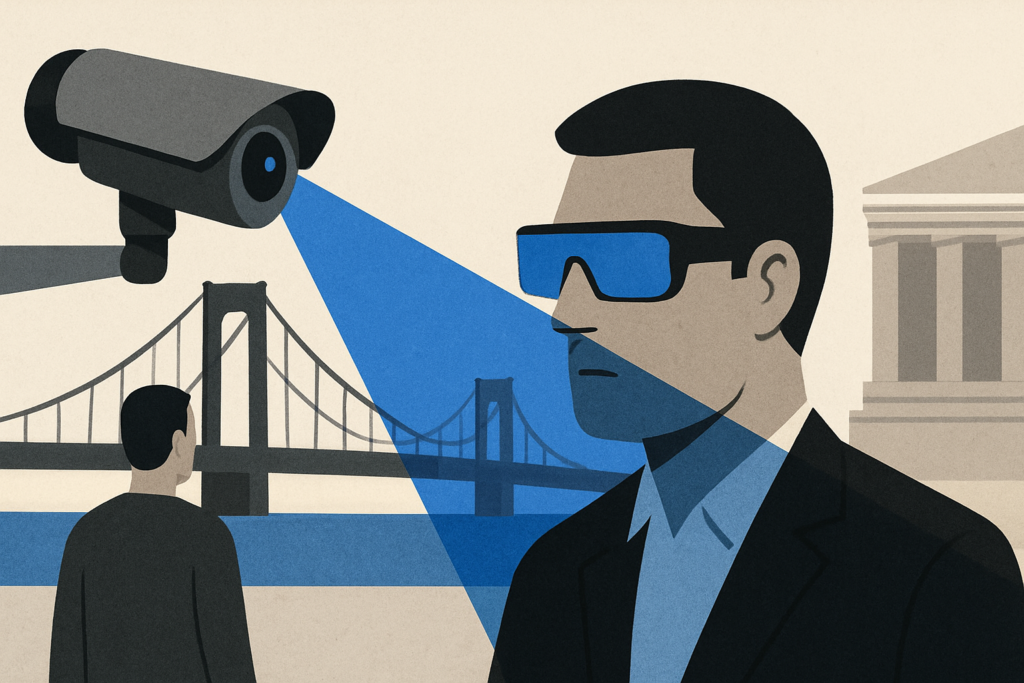
Caledonian MacBrayne (CalMac) has temporarily stopped allowing members of the public onto ship bridges after a passenger used so-called smart glasses to film people in a restricted area without permission. Reported on 24 July 2026, the incident highlights the growing privacy and operational risks posed by wearable cameras that are small, discreet and easy to activate.
What happened on the CalMac ferry
According to local reporting, a passenger was found to be filming other passengers and crew while wearing Meta-branded smart glasses. CalMac confirmed it has paused bridge visits while it reviews the incident, stressing that crew safety and wellbeing are priorities. It is not known which vessel was affected.
How smart glasses change the privacy landscape
Modern smart glasses combine a near-invisible camera with on-board controls, allowing users to capture photos or video by touching the frame. That combination makes recording less conspicuous than a phone or handheld camera and raises a range of privacy concerns in public and semi-public spaces, including transport hubs and vehicles.
The issue is not limited to casual privacy intrusions. Recording in restricted operational areas such as ship bridges, cockpits or engine rooms can threaten safety and confidentiality. Even if footage is not publicly shared, the mere act of capturing sensitive activity can be uncomfortable for staff and vulnerable passengers.
Practical steps for transport operators
Transport operators can take immediate, pragmatic steps to reduce risk while longer-term policies and regulations are worked out:
- Policy clarity: Update visitor and passenger policies to explicitly prohibit unauthorised recording in restricted areas. Make rules visible on tickets, boarding passes and signage.
- Staff training: Ensure crew and frontline staff know how to respond when they suspect covert recording—how to ask for devices to be put away, when to escalate, and how to report incidents.
- Controlled access: Keep sensitive areas, such as bridges, off-limits to casual visitors. If visits are offered as a public engagement activity, require supervised access and advance vetting.
- Incident logging: Maintain a clear process for documenting suspected recordings, preserving any evidence and informing relevant authorities where appropriate.
- Technology choices: Consider non-invasive detection and deterrence options where legally permitted—improved signage, visible staff presence and physical barriers are often effective first lines of defence.
Detection technology: limits and trade-offs
There are technical methods that can help detect or deter covert recordings, but each has limits. Visible indicators on devices, such as lights that show when a camera is active, are helpful when present, but not all wearables have conspicuous indicators. Software-based detection that analyses network traffic or electromagnetic emissions raises privacy and legal concerns of its own and may not be reliable across different device models.
Relying on technology alone risks false positives and privacy trade-offs. For many operators, clear rules, staff awareness and controlled access will be the most practical and proportionate approach.
Regulatory and legal context
Wearable cameras sit at the intersection of privacy, workplace safety and public-interest journalism. Legal frameworks differ by jurisdiction: in many places it is lawful to record in public spaces where there is no reasonable expectation of privacy, but recording in restricted operational areas or capturing images of individuals in intimate or private contexts can carry civil or criminal consequences.
Regulators and lawmakers are increasingly taking notice as wearable devices become more capable and widespread. Transport agencies, workplace safety regulators and data protection authorities may all have a role to play in setting expectations for where recording is acceptable, how consent should be handled, and what responsibilities operators have to protect passengers and staff.
What passengers and visitors can do
If you have a pair of smart glasses or other wearable camera, treat them like any other recording device: ask permission before filming people, follow posted rules, and respect restricted areas. Passengers who see suspected covert filming should report it to crew or staff rather than confronting individuals directly.
Looking ahead
Incidents such as the CalMac case underscore the mismatch between rapidly evolving consumer hardware and lagging social, operational and regulatory norms. Transport operators can reduce immediate risk through clear policies and staff preparedness, while industry groups and regulators will need to consider longer-term guidance on wearables that balance innovation with privacy and safety.
As smart glasses and other always-on wearables proliferate, managing their impact in shared spaces will be an increasingly pressing operational and policy challenge.
Source: BBC