Google co‑founder Sergey Brin told the All‑In podcast that he recently discovered Gemini — Google’s own AI model — on an internal list of tools engineers were not allowed to use for coding. Brin said he spent weeks trying to get the rule removed and ultimately asked CEO Sundar Pichai to intervene; after that the restriction was lifted and engineers began using Gemini internally.
Brin discovered Gemini listed on an internal ‘no list’
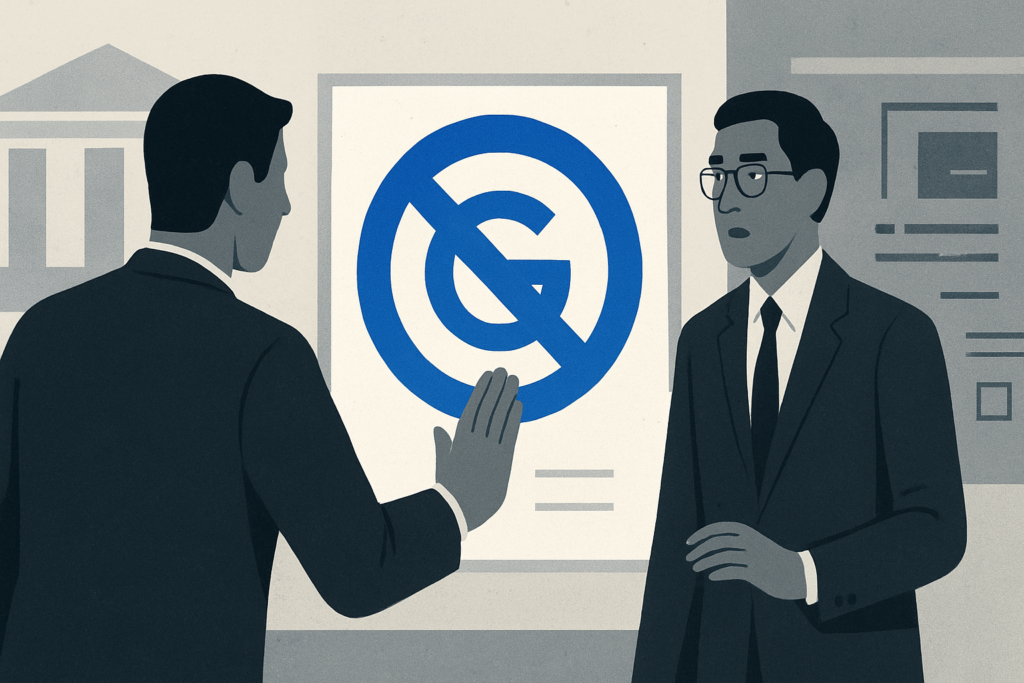
According to the Times of India’s summary of Brin’s remarks on the All‑In podcast, Brin said he had returned to writing code at Google when he noticed an internal webpage that listed tools engineers were allowed and not allowed to use for coding. He was surprised to find Gemini on the “no list.” Brin described a “big tiff” with the people who had put the restriction in place and said the rule remained, despite not being actively enforced.
How the restriction was raised and removed
Brin said he spent weeks trying to have the restriction removed himself but ultimately asked Sundar Pichai to handle the dispute. “I definitely told Sundar. He was very supportive,” Brin told podcast hosts, adding he told Pichai he “can’t deal with these people” and asked the CEO to step in. After Pichai’s involvement, Brin said the restriction was fixed and “people are using it.” The account in the source article confines itself to those exchanges and quotes from Brin; it does not name the internal team or the specific approval process that had placed Gemini on the list.
Why it matters
The episode demonstrates a concrete mismatch between a company’s public AI products and internal access policies: an internal rule prevented engineers from using the firm’s own model for coding tasks. That gap matters because, as Brin framed it in the podcast, it shows internal rules can lag behind a company’s AI strategy. Where internal policies restrict access to tools developers need, teams can face friction in adopting company products or aligning engineering practices with product strategy.
Internal governance and cultural signals at Google
Brin’s account highlights several governance and culture signals that are visible from the reporting. First, the presence of an internal “no list” on a webpage indicates there are explicit, documented prohibitions for tooling in some workflows. Second, Brin said the rule was not actively enforced even while it existed, a gap between documented policy and operational enforcement.
Brin and the podcast hosts also discussed internal power dynamics. The hosts observed that Brin’s super‑voting shares give him formal influence; Brin said he passed the fight to Pichai and described the ability of junior employees to say no to a founder as “a sign of a healthy culture.” Those comments indicate that formal authority, interpersonal dynamics and documented rules can interact in ways that ultimately determine which tools are available to engineers.
What to watch next
The report leaves several open questions that will determine how important this episode proves to be. It is unclear which internal group created the restriction, the rationale they used, and whether similar prohibitions exist for other Google models or for other engineering workflows. The source does not specify whether the policy change was accompanied by guidance on safe use, audits, or technical controls.
Also unresolved is whether the change that allowed engineers to use Gemini was a one‑off intervention by executives or part of a broader policy update. Brin’s statement that “it did get fixed and people are using it” confirms an outcome but not the scope or durability of the change.
Brin’s anecdote offers a narrow but revealing look at how internal policy, enforcement gaps and executive intervention can shape access to AI tools inside a major technology company. It raises questions about consistency between public AI strategy and internal governance without, in the source’s account, providing details on the underlying compliance or security assessments that drove the original restriction.
Source: The Times of India