
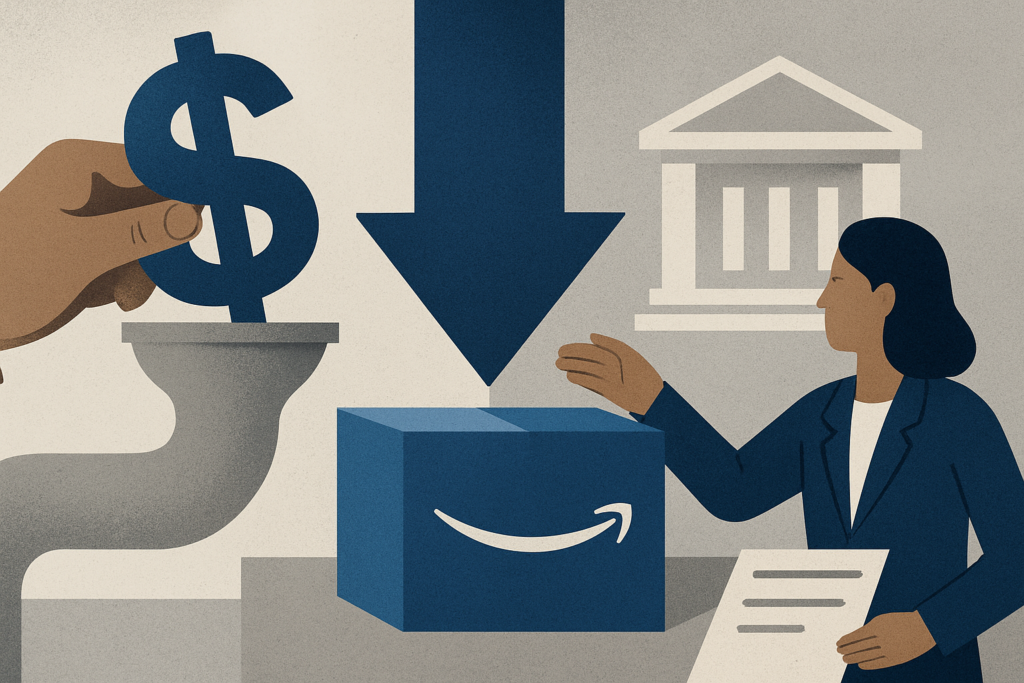
Amazon’s $2.5 billion settlement with the Federal Trade Commission gives eligible U.S. Prime customers a narrow window to file claims for refunds and forces the company to change how it enrols and cancels Prime subscriptions. Consumers who signed up through certain checkout flows between June 23, 2019 and June 23, 2025 and meet use-based criteria can apply for reimbursements up to $51 by the July 27, 2026 deadline.
Settlement details and the immediate claims deadline
The FTC action led to a $2.5 billion settlement announced after Amazon agreed in September 2025 to put $1.5 billion into a consumer refund fund and pay a separate $1 billion civil penalty; Amazon did not admit wrongdoing. The FTC alleged Amazon enrolled customers without informed consent and made cancellations difficult.
Consumers must submit claims by July 27, 2026 through the official settlement website, SubscriptionMembershipSettlement.com. The claim window applies to U.S. Prime customers who either enrolled through one of the specific flows challenged by the FTC or unsuccessfully tried to cancel online during the covered period of June 23, 2019 to June 23, 2025.
The settlement requires Amazon to decide whether a particular customer used one of the challenged enrollment flows; customers who already received an automatic payment are not required to file. Questions about the claims process can be directed to [email protected], and the FTC said it expects to distribute claims-process payments in late 2026.
How the claims process works and who qualifies
Eligible claimants must confirm they either enrolled unintentionally or attempted and failed to cancel using Amazon’s online process. The flows identified by the FTC include Amazon’s universal Prime decision page, the shipping selection page, single-page checkout and the Prime Video enrollment process; Amazon will determine if a claimant enrolled through one of those flows.
To qualify for payment, a consumer must have used more than three but fewer than ten Prime benefits during any 12-month period of Prime enrollment. Approved claimants may recover membership fees up to $51. Payments can be issued by check, PayPal or Venmo, and submitting a claim does not guarantee payment.
The FTC cautioned consumers about refund scams, noting neither the agency nor Amazon will require payment to release a settlement refund and warning people to be wary of anyone promising guaranteed approval or special access.
Why the settlement matters for customers and Amazon’s platform rules
The settlement creates a concrete, consumer-facing remedy for people the FTC says were enrolled without informed consent or who found cancellation opaque. For affected customers, the immediate impact is the opportunity to recoup up to $51 in membership fees if they meet the specified use and enrollment criteria and file by the deadline.
For Amazon, the binding requirement to change enrollment and cancellation flows forces the company to alter how Prime is presented and managed at checkout and in subscription flows. Those operational changes mean Amazon must adopt clearer disclosures and make it easier for customers to decline or cancel Prime in the ways specified by the settlement.
Platform governance, merchants and competition: the broader implications
The settlement focuses regulatory pressure on subscription practices and how platforms obtain consent. By mandating clearer disclosures and easier cancellation, the FTC’s terms change a set of product-design decisions that touch checkout UI, subscription defaults and post-signup communications.
Those changes are likely to affect groups beyond individual customers. Third-party sellers and merchants who rely on Prime’s purchase incentives, as well as product teams responsible for checkout and subscription UX, will need to adapt to revised flows and disclosure requirements. Investors and regulators will watch whether changes to Prime’s enrollment and cancellation experience alter subscription growth or churn metrics, although the source does not provide specific financial outcomes.
What to watch next
Key unanswered questions remain. The FTC has set the claims deadline and the settlement requires operational changes, but the source does not provide precise dates for when Amazon must implement the new enrollment and cancellation processes or detail how Amazon will notify affected customers about changes.
Watch for the settlement website to publish claim-processing timelines and for Amazon’s public communications or UI updates that show how the company will display disclosures and cancellation options. Also monitor the timing of payments: the FTC said claims-process distributions are expected in late 2026, but no specific mailing date has been announced.
Consumers should also watch for scam attempts tied to the settlement; the FTC warned that neither it nor Amazon will ask for money to release refunds and advised caution against anyone promising guaranteed approvals.
The settlement gives eligible Prime customers a short, concrete path to recover modest membership fees and forces Amazon to change how it presents and manages Prime sign-ups and cancellations — adjustments that will ripple through its checkout UX and affect parties who rely on Prime-driven buying behavior.
Source: Fox Business