
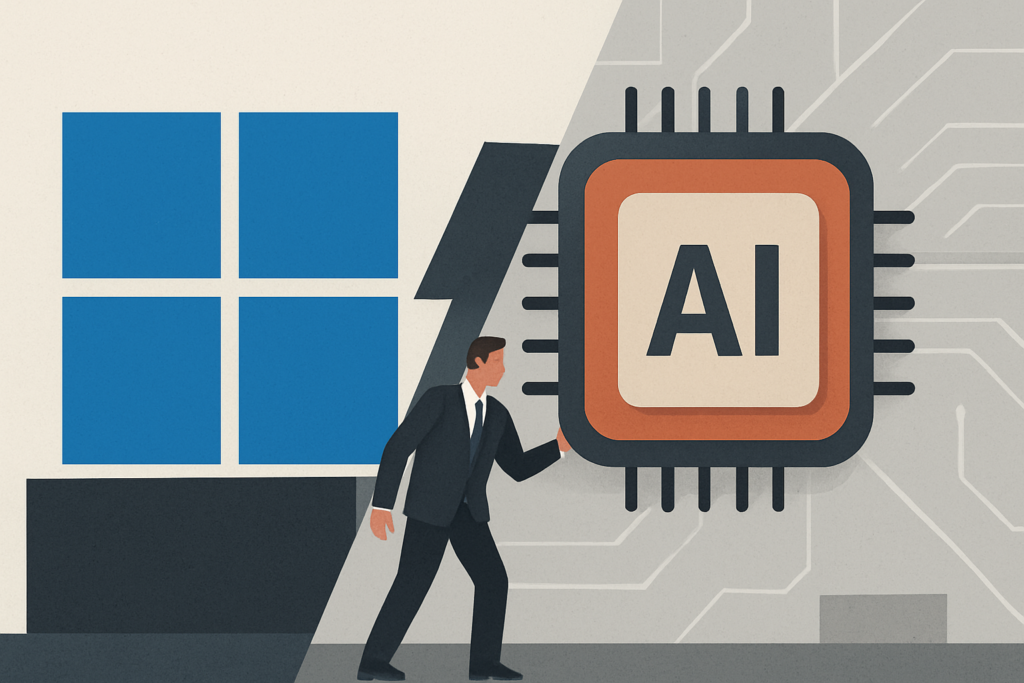
Microsoft is broadening its use of AMD’s AI accelerators in Azure, embracing AMD’s upcoming Helios platform as an option for customers running large language and other large-scale AI models. Helios, which AMD says is scheduled to ship in the second half of 2026, is positioned as an alternative to Nvidia’s GPU-dominated cloud stack and reflects growing demand among enterprises and cloud users for more choices in AI infrastructure.
What Helios is intended to do for Azure
AMD’s Helios platform has been designed specifically for large model workloads. By integrating Helios into Azure, Microsoft aims to give customers a non‑Nvidia path to run compute-heavy AI applications. Company executives framed the move as meeting customer needs for variety in procurement: AMD’s chief executive described the broadened collaboration as a major milestone, while Microsoft’s CEO emphasized that customers require more choices for AI infrastructure.
The timing is notable: Helios is slated to arrive in the second half of 2026. Microsoft’s decision to expand its use of AMD silicon appears to be part of a broader strategy to diversify the hardware base that underpins Azure’s AI services, allowing customers different performance and cost profiles when deploying large models.
Where this fits in the competitive landscape
Nvidia continues to hold significant pricing power in the AI accelerator market, driven by its dominant GPU lineup and ecosystem. However, AMD and a growing group of custom accelerator providers — including companies building their own TPUs — are increasingly being presented as viable alternatives. Microsoft’s move to incorporate more AMD chips into Azure underscores that competitive pressure.
For cloud customers and enterprises, competition among suppliers may translate into more negotiated pricing, alternative software stacks and different performance tradeoffs for training and inference. Microsoft’s public statements about expanding customer choice reflect that dynamic, pushing cloud providers to offer multiple hardware paths rather than relying on a single supplier.
Potential new customers: Anthropic and others
AMD may be on track to win additional high-profile customers. A public GitHub profile tied to an AMD director indicates that Anthropic, the company behind the Claude models, is testing AMD hardware. Industry tracker SemiAnalysis reported that AMD has assigned Anthropic its highest priority rating, placing Anthropic alongside other large customers such as Meta in terms of priority.
Anthropic’s work with AMD is still in the testing phase. According to reporting, AMD could make a formal announcement about the relationship at its upcoming “Advancing AI” conference if engineering teams are able to resolve outstanding software quality issues. Separately, OpenAI already maintains a partnership with AMD, indicating that major AI developers are evaluating AMD silicon as part of their infrastructure mixes.
Unresolved issues and what to watch
While Helios is intended for large model workloads, the path to broad adoption depends on a number of factors that remain in flux. Software maturity and toolchain stability are explicitly noted as areas AMD must address to satisfy some potential partners. The outcome of engineering work to resolve software quality concerns will likely determine whether AMD can translate initial tests into long-term cloud deployments.
Other variables include pricing dynamics, the pace at which customers adopt non‑Nvidia architectures, and the continued evolution of custom accelerators from hyperscalers and AI companies. Nvidia’s established ecosystem — including optimized libraries and broad marketplace adoption — remains a high bar for competitors to clear.
Implications for cloud users and AI operators
For enterprises choosing cloud infrastructure, Microsoft’s increased use of AMD chips in Azure could expand procurement options and influence total cost of ownership calculations for large-model workloads. Operators evaluating performance and ecosystem compatibility will need to weigh Helios-based instances against Nvidia GPUs and other custom accelerators, taking into account software support, vendor roadmaps and long-term costs.
At a market level, the shift signals the continuing fragmentation of the AI hardware landscape. As more vendors introduce alternatives to Nvidia’s GPUs and cloud providers integrate multiple architectures, customers may benefit from greater bargaining power and more tailored hardware choices for specific model types and workloads.
Microsoft’s move to broaden AMD usage in Azure, AMD’s courting of major AI firms, and the emphasis on software readiness all point to a competitive phase in cloud AI infrastructure that will be defined as much by software ecosystems as by raw silicon performance.
Source: The Decoder